
Blog
5 Brilliant Steps on How to Choose a Flattering Dress in 2026
11
Nov
Nov
5 Brilliant Steps on How to Choose a Flattering Dress in 2026
Finding a dress that makes you feel breathtaking shouldn’t feel like decoding an impossible puzzle. Too often, traditional fashion advice treats our bodies like geometric equations to hide, rather than unique silhouettes to celebrate.
Learning how to choose a flattering dress is really about alignment, balance, and intentional styling. When a garment complements your proportions and lifestyle, confidence follows naturally.
1. Focus on Proportions Instead of Restrictive Body Labels
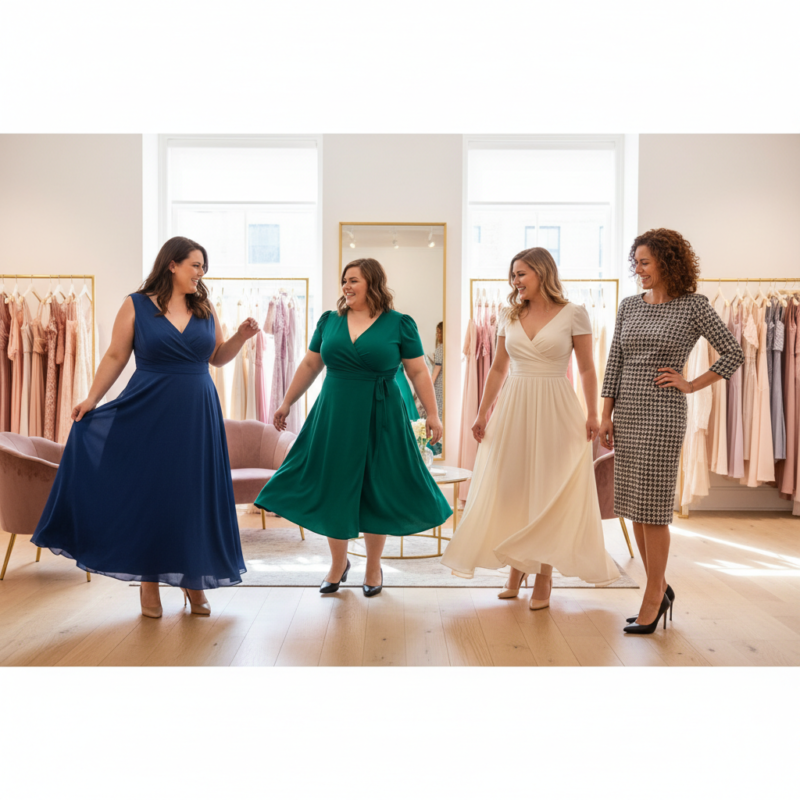
Forget rigid fruit-shaped categories. Instead, evaluate three key balance points: your shoulder width, waist definition, and hip line.
If your shoulders are broader than your hips, an A-line skirt or gentle flare creates visual symmetry. Conversely, if your hips carry more volume, boatneck collars, structured lapels, or statement sleeves draw the eye upward seamlessly.
- A-Line Silhouettes: Universally balances narrower shoulders and fuller hips.
- Empire & High-Waist Cuts: Elongates petite frames and accommodates fuller midsections comfortably.
- Column & Straight Drapes: Creates an unbroken vertical line that lengthens your overall profile.
2. Pick Fabrics with Controlled Drape Over Cling
Fabric determines how a dress moves with you. Flimsy, ultra-thin synthetic knits tend to bunch and cling to undergarments, creating tension lines across the bust and hips.
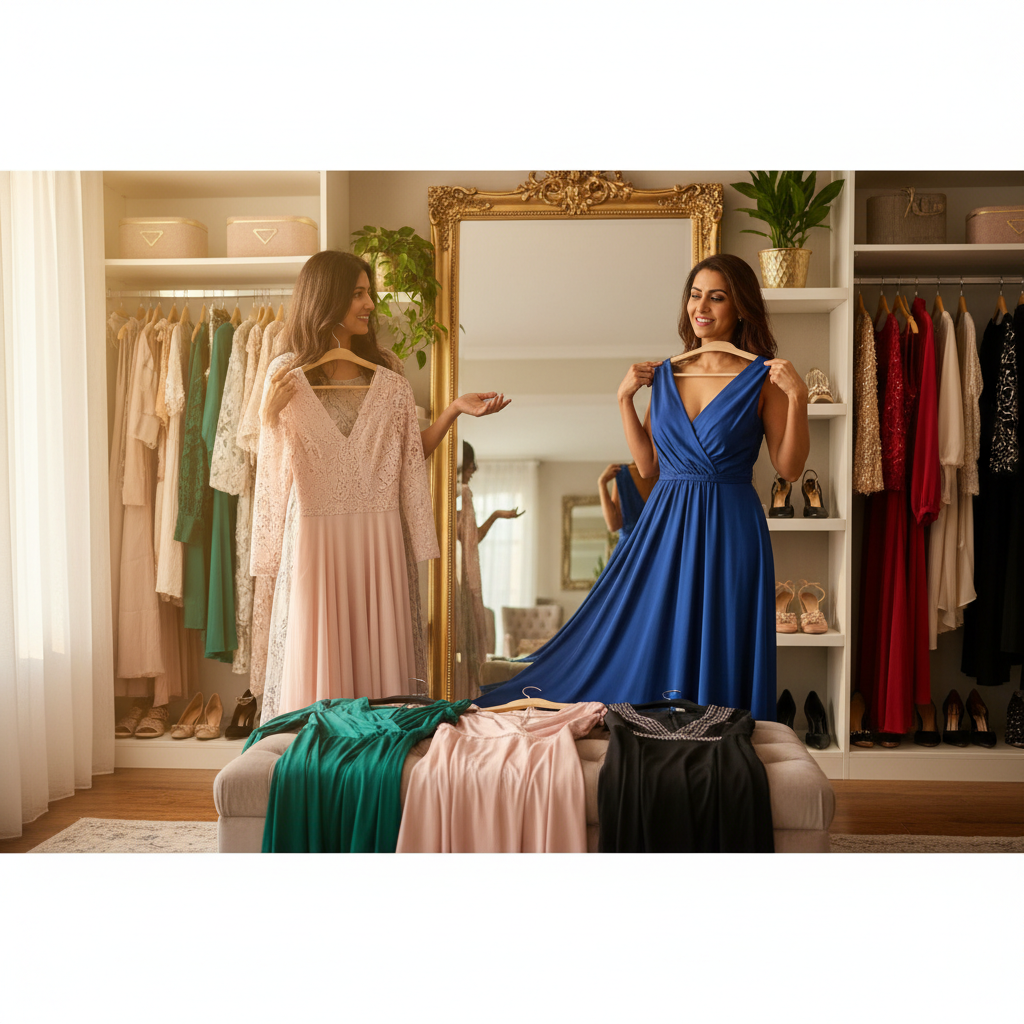
Look for medium-weight fabrics with body and fluid drape, such as structured crepes, weighted chiffons, and brushed finishes. For modest or evening elegance, premium textured options like our Nubuck Abaya with Floral Accessories offer structure that skims effortlessly without collapsing against your figure.
“A truly flattering dress doesn’t conceal your figure—it harmonizes with your natural lines to let your inner elegance take center stage.”
3. Harness Necklines and Sleeves to Frame Your Features
Your neckline dictates where visual attention settles first. Open V-necks and sweetheart cuts lengthen the neck and balance a fuller bust, while modest jewel and mandarin collars highlight delicate jewelry and elegant posture.
Sleeve choice completes the frame. Cuffed bishop sleeves balance torso proportions, while structured straight sleeves provide polished arm coverage suitable for all seasons.
💡 Pro Tip: If you have a short torso, avoid thick, contrasting horizontal belts that cut your upper body in half. Choose tonal belts or diagonal draping to visually stretch your midsection.
4. Dial in Waist Placement for Your Torso Length
The secret to a silhouette that flatters is aligning the dress waistline with your natural bending point. A drop waist can overwhelm shorter legs, while standard waists often sit uncomfortably high on long torsos.
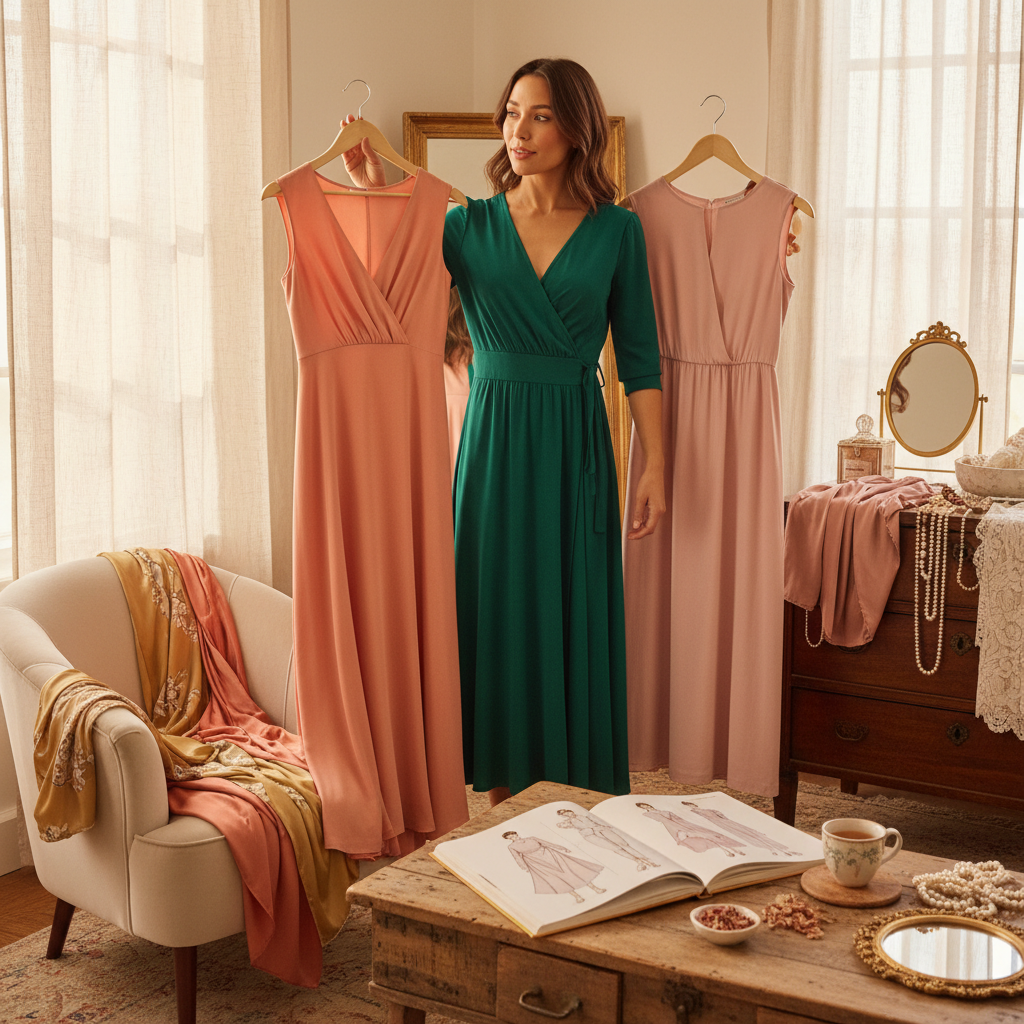
For formal invitations, an adjustable tie or gently cinched sash lets you customize your fit instantly. Pieces like our Glamorous Evening Dress Tulle Gown with Belted Waist let you tailor your waistline position for all-day comfort and regal presence.
5. Conduct the 3-Point Movement and Fit Check
A dress is only truly flattering if you can breathe, walk, and sit in it with absolute ease. Never judge fit solely while standing frozen in front of a dressing-room mirror.
Before committing to a style—especially when shopping online—test these three critical areas:
- Shoulder Seams: Ensure the seam rests precisely at your shoulder bone without pulling or spilling over.
- Bust and Torso Ease: Check for horizontal tension lines across the chest; fabric should lie smooth.
- Sitting Allowance: Sit down in a chair to verify the hips, zipper, and waist remain comfortable without gaping.
For timeless occasionwear, versatile sets like the Stone-Embellished Abaya & Shawl Set deliver refined drape and generous movement, eliminating restrictive fitting stress entirely.
Frequently Asked Questions
What is the most universally flattering dress style for all figures?
The A-line wrap dress is widely regarded as the most universally flattering silhouette. Its diagonal cross-front draws the eye vertically, the adjustable waist accommodates fluctuating measurements, and the flared skirt floats over hips and thighs without clinging.
Which dress style best flatters a fuller midsection?
Dresses with empire waists, raised A-line cuts, and vertical pleating or ruching flatter a fuller tummy best. Structured fabrics that hold their own shape rather than thin stretch knits provide smooth lines without feeling tight.
How can I ensure a dress ordered online will fit properly?
Always compare your largest measurement (bust or hip) to the brand’s size chart rather than ordering your standard numeric size. Prioritize styles with adjustable features—such as tie belts, wrap ties, or elastic back panels—and review garment fabric composition for drape and stretch.