
Blog
5 Stunning Sustainable Dresses for Women You Need in 2026
20
Oct
Oct
5 Stunning Sustainable Dresses for Women You Need in 2026
Building an intentional wardrobe shouldn’t mean sacrificing personal style or effortless elegance. Finding genuine sustainable dresses for women allows you to look breathtaking while actively lowering your carbon footprint and supporting fair artisan wages.
Today’s conscious fashion combines circular design with timeless silhouettes. Here is your definitive guide to the best eco-friendly silhouettes, fabrics, and certifications defining 2026.
“True elegance lies in wearing pieces that honor both your identity and the hands that crafted them.”
1. The Crisp Organic Linen Midi Dress
Linen remains the undisputed hero of sustainable summer style. Woven from resilient flax plants that require minimal water and zero synthetic pesticides, this silhouette keeps you cool during scorching afternoons.
- Fabric: 100% GOTS-certified French flax linen
- Best Occasion: Casual brunch, beach vacations, or outdoor garden parties
- Styling Tip: Pair with woven raffia mules and delicate gold jewelry for an effortless weekend aesthetic
2. The Silky TENCEL™ Lyocell Slip Dress
If you crave red-carpet glamour with zero environmental guilt, closed-loop TENCEL™ lyocell is unmatched. Sourced from sustainably managed eucalyptus wood pulp, it drapes like liquid silk while remaining fully biodegradable.
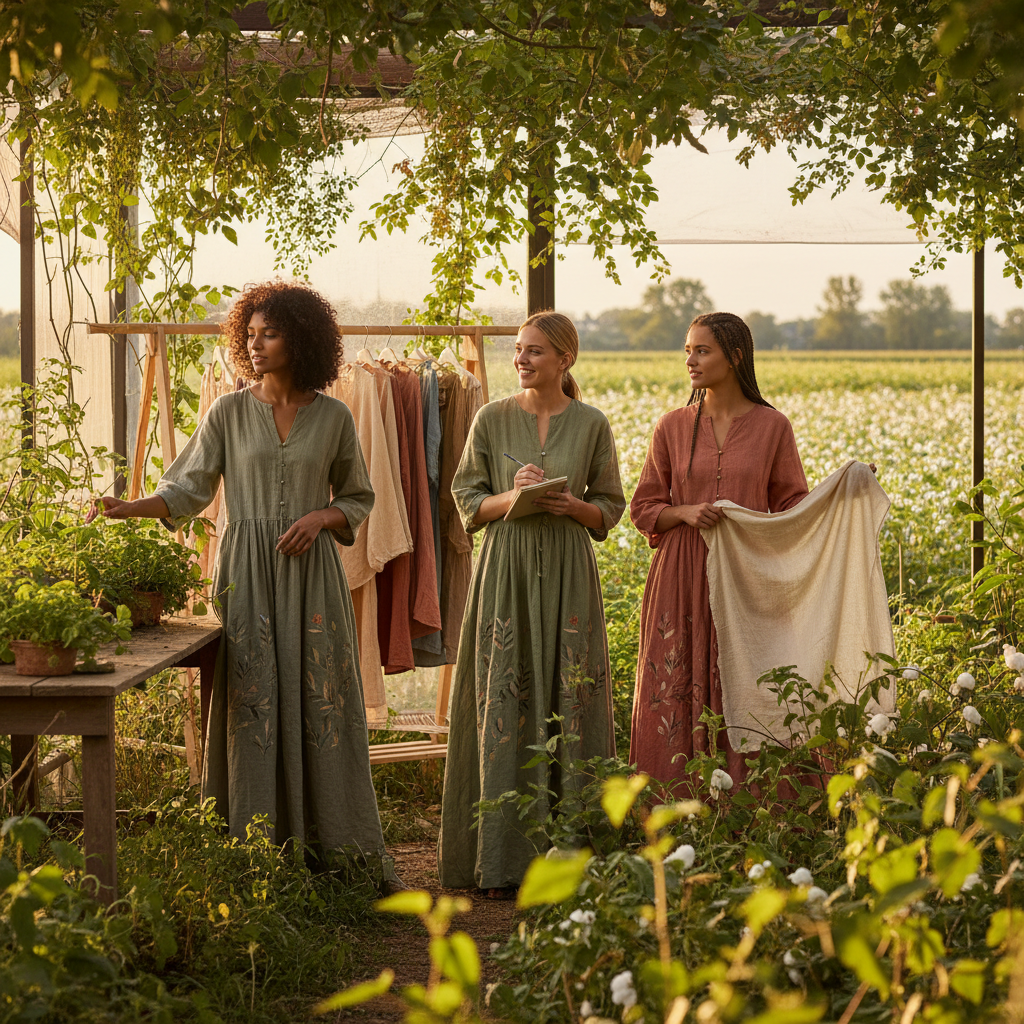
Its breathable, moisture-wicking drape makes it a flawless evening staple. You can easily find versatile designs in our chic conscious collection that transition smoothly from day to night with a tailored blazer.
3. The Breezy Hemp Tiered Maxi Dress
Hemp is four times stronger than conventional cotton and grows rapidly while naturally regenerating topsoil. A tiered maxi silhouette provides breezy volume, total opacity, and effortless modesty without weighing you down.
- Fabric: Organic hemp-cotton blend
- Season: Spring through late autumn
- Care: Machine wash cold, hang dry to soften the fibers with every wash
💡 Pro Tip: Always look for verified third-party textile seals such as GOTS (Global Organic Textile Standard), OEKO-TEX Standard 100, or B Corp certifications to avoid deceptive greenwashing.
4. The Tailored Deadstock Cotton Wrap Dress
Deadstock fashion rescues high-end designer surplus yardage from landfills. A structured wrap dress accentuates your natural waistline while delivering professional polish suitable for the boardroom or formal client dinners.
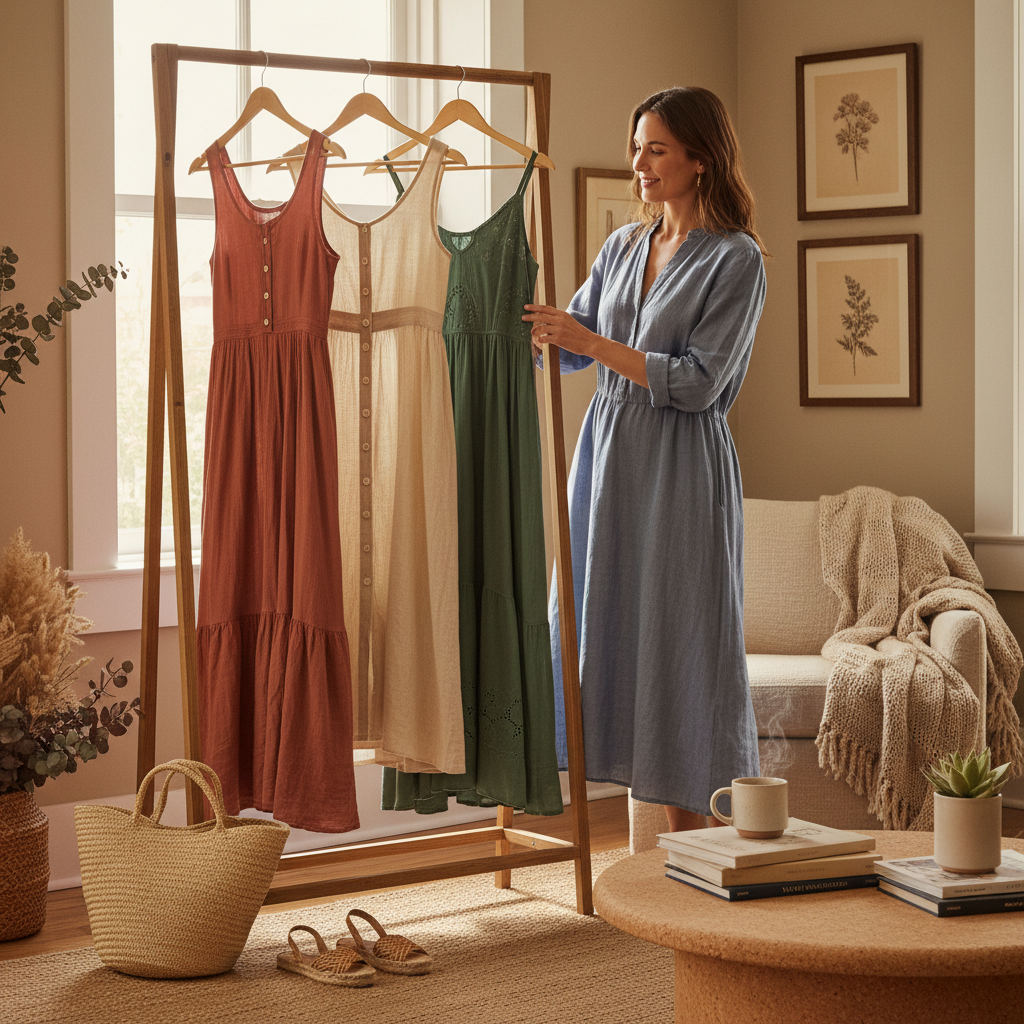
Because deadstock textiles are produced in limited batches, each piece feels exclusive. Pair yours with neutral court shoes and a structured tote for an empowering 9-to-5 look.
5. The Modern Recycled Knit Sweater Dress
When the temperature drops, ribbed knit dresses offer cozy warmth without petroleum-heavy virgin acrylic. Crafted from recycled post-consumer wool or certified recycled cotton, this silhouette skims the body effortlessly.
- Best Occasion: Winter office days and intimate dinner dates
- Styling: Layer with knee-high vegan leather boots and a cozy tailored coat
- Durability: Highly resistant to pilling when cared for with a wool comb
| Fabric | Eco Benefit | Best For |
|---|---|---|
| Organic Linen | Low water use, zero harsh chemicals | Warm weather & everyday leisure |
| TENCEL™ Lyocell | 99% closed-loop solvent recycling | Evening wear & fluid drapes |
| Hemp | Soil-regenerating & highly durable | Breezy summer maxis |
| Deadstock Cotton | Diverts textile surplus from landfills | Structured work & wrap dresses |
Ready to upgrade your everyday wardrobe with mindful design? Take a moment to explore AMO Fashion’s curated dress collection to find ethical pieces crafted for longevity and timeless elegance.
Frequently Asked Questions
What is the most sustainable material for women’s dresses?
Organic linen and hemp lead the pack because they require very little water, zero pesticides, and enrich the soil as they grow. Closed-loop TENCEL™ lyocell is also exceptional for soft, fluid drapery.
Are sustainable dresses worth the higher price point?
Yes. Although the upfront investment is higher, sustainable garments utilize superior sewing construction and durable fibers, yielding a dramatically lower cost-per-wear over several years.
How do I verify if a brand is truly sustainable?
Look beyond vague marketing terms like ‘green’ or ‘eco-conscious.’ Check for independent third-party certifications like GOTS, Fair Trade, OEKO-TEX, and transparent factory audits detailing worker safety and wages.