
Blog
5 Essential Fabrics for Your Moroccan Abaya in 2026
07
Aug
Aug
5 Essential Fabrics for Your Moroccan Abaya in 2026
Choosing the right fabric for your Moroccan abaya isn’t just about aesthetics; it’s about comfort, drape, and cultural authenticity. A Moroccan abaya is distinctive for its elegant flow, often incorporating intricate embellishments like sfifa and embroidery. The fabric must complement these features while suiting Morocco’s diverse climates. Let’s explore the top five fabrics that will make your abaya truly special.
“The fabric whispers the story before a single stitch is seen. For an abaya, it’s the very soul of elegance and modesty combined.”
💡 Pro Tip: Always consider your specific use—daily wear, special occasion, or travel—before settling on a fabric. Moroccan tailors often prefer working with fabrics that hold their shape well for traditional designs.
1. Crepe: The Elegant All-Rounder
Crepe is a perennial favorite for good reason. Its distinctive crimped, crinkled texture offers a beautiful drape that flows gracefully with every movement. It’s opaque, moderately wrinkle-resistant, and comes in various weights, making it versatile for both casual and formal Moroccan abayas. Light crepe is perfect for spring, while heavier versions suit cooler evenings or more structured designs.
- Fabric: Polyester or silk crepe
- Color: Rich jewel tones like emerald green, sapphire blue, or classic black
- Occasion: Versatile for daily wear, evening events, and semi-formal gatherings
- Styling: Pairs beautifully with embroidered sfifa details and metallic accessories.
2. Nida: The Premium Choice for Modesty
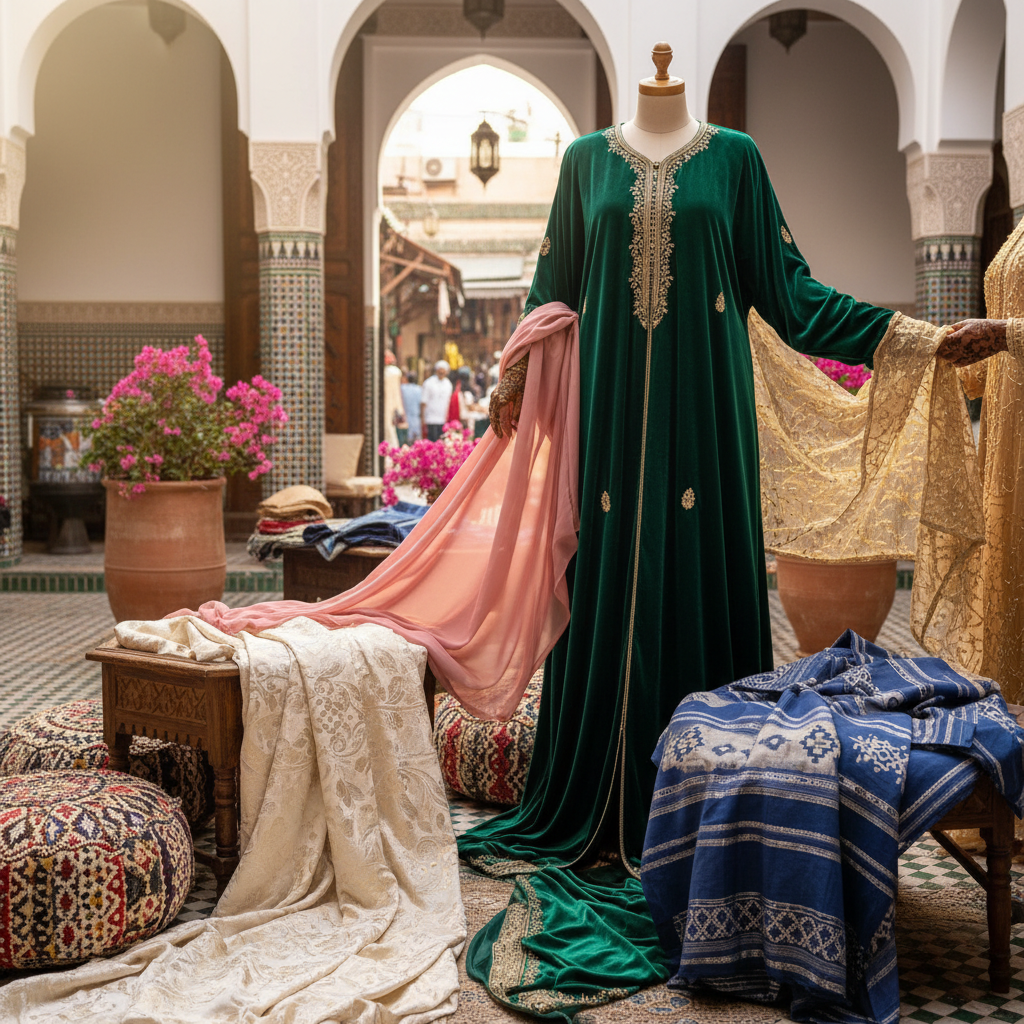
For those seeking the ultimate in luxurious drape and modesty, Nida fabric is an excellent answer to what fabric for moroccan abaya. Originating from the Gulf region but popular in Moroccan styles for its quality, Nida is a soft, flowing polyester blend known for its semi-matte finish and exceptional opacity. It’s breathable, resists wrinkling, and offers a beautiful, elegant silhouette that’s perfect for special occasions and prayer.
- Fabric: Nida (polyester blend)
- Color: Soft pastels, deep navy, or classic black
- Occasion: Formal events, Eid celebrations, or upscale daily wear
- Styling: Enhance with delicate beadwork or subtle embroidery; complement with a silk hijab.
3. Cotton: The Breathable Everyday Essential
When the Moroccan sun shines bright, cotton is your best friend. Lightweight and incredibly breathable, cotton abayas are perfect for summer and daily errands. While it may not have the same luxurious drape as crepe or Nida, its comfort and absorbency are unmatched. Look for blends that offer a slightly better drape and wrinkle resistance for a polished look.
- Fabric: Pure cotton or cotton-linen blend
- Color: Earthy tones, light blues, or crisp whites
- Occasion: Casual outings, market visits, or hot weather wear
- Styling: Accessorize with woven bags and comfortable sandals for a relaxed, chic look.
4. Satin: For Shimmering Special Moments
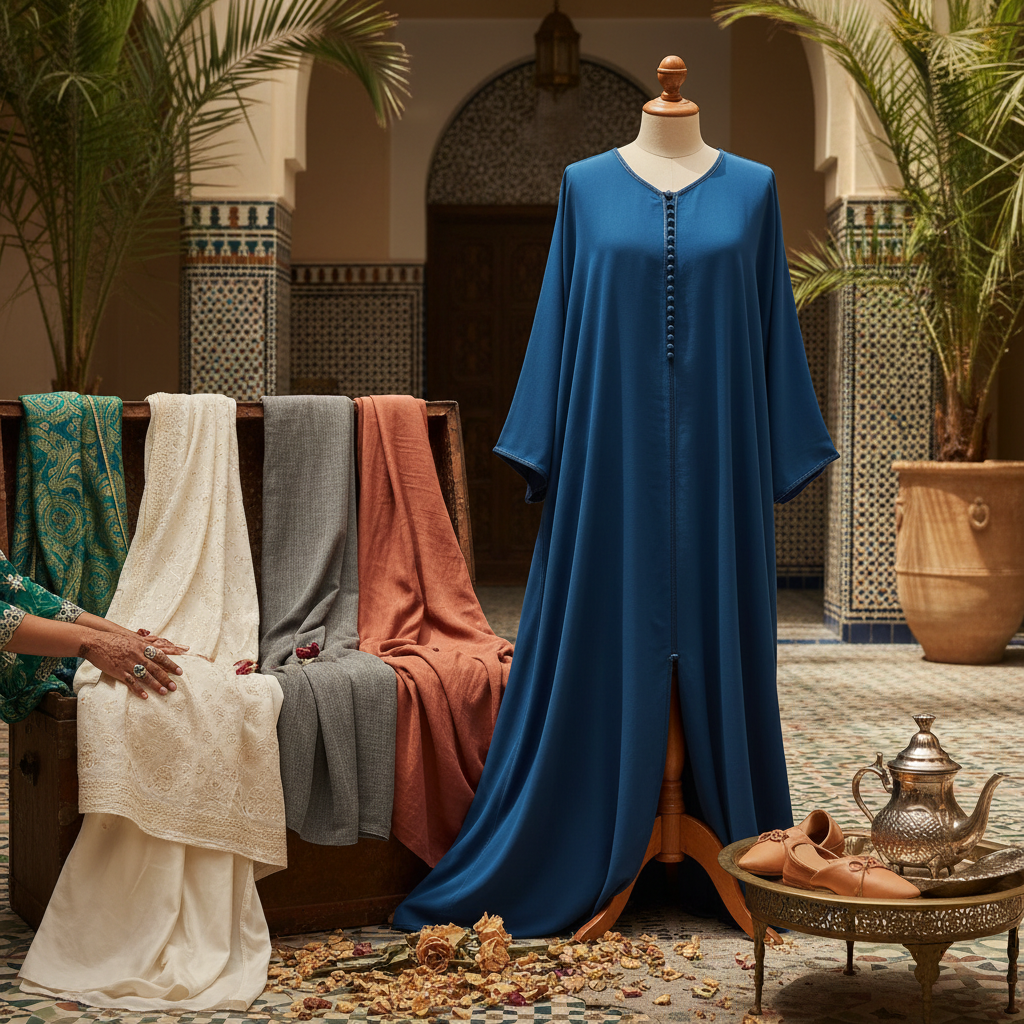
Satin, with its glossy surface and smooth feel, is the fabric of choice for creating a truly opulent Moroccan abaya. While pure satin can sometimes cling, modern satin blends offer a more forgiving drape, combining elegance with wearability. It’s ideal for evening events, weddings, or when you want to make a sophisticated statement.
- Fabric: Silk satin or polyester satin blend
- Color: Deep jewel tones, metallics, or rich burgundy
- Occasion: Weddings, festive celebrations, or formal dinners
- Styling: Pair with intricate Moroccan jewelry and a matching embellished hijab from our hijab collection.
5. Chiffon: Lightweight Grace and Layering
Chiffon offers an ethereal, delicate quality, perfect for layering or creating flowing outer abayas. Its sheer nature means it’s often used as an overlay or for specific parts of the abaya, like sleeves or decorative panels. For a full abaya, it would typically be lined. Chiffon adds movement and a touch of romance, making it ideal for warmer climates or soft, feminine designs. Explore our range of new arrival abayas that expertly blend these fabrics.
- Fabric: Silk chiffon or polyester chiffon
- Color: Pastels, light neutrals, or printed designs
- Occasion: Summer events, beach resorts, or as a stylish outer layer
- Styling: Layer over a solid inner dress; keep accessories minimal to highlight its delicate nature.
FAQ
What is the best fabric for a Moroccan abaya specifically for hot weather?
For hot Moroccan weather, breathable fabrics like cotton, linen, or lightweight Nida are ideal. They allow air circulation and absorb moisture, keeping you comfortable.
Is Nida better than crepe for Moroccan styles?
Both Nida and crepe are excellent choices. Nida offers a slightly softer, more matte finish and often superior wrinkle resistance, making it premium for a flowing drape. Crepe provides a beautiful textured surface and diverse weights, allowing for more structured or fluid designs depending on the type.
How do I choose the most opaque fabric for a modest Moroccan abaya?
To ensure maximum opacity, opt for fabrics like Nida, thicker types of crepe, or even double-layered cotton. Always hold the fabric up to the light before purchasing to gauge its sheerness, especially for lighter colors.