
Blog
5 Exquisite Saudi Heritage Abaya Designs You Need to Know
16
May
May
5 Exquisite Saudi Heritage Abaya Designs You Need to Know
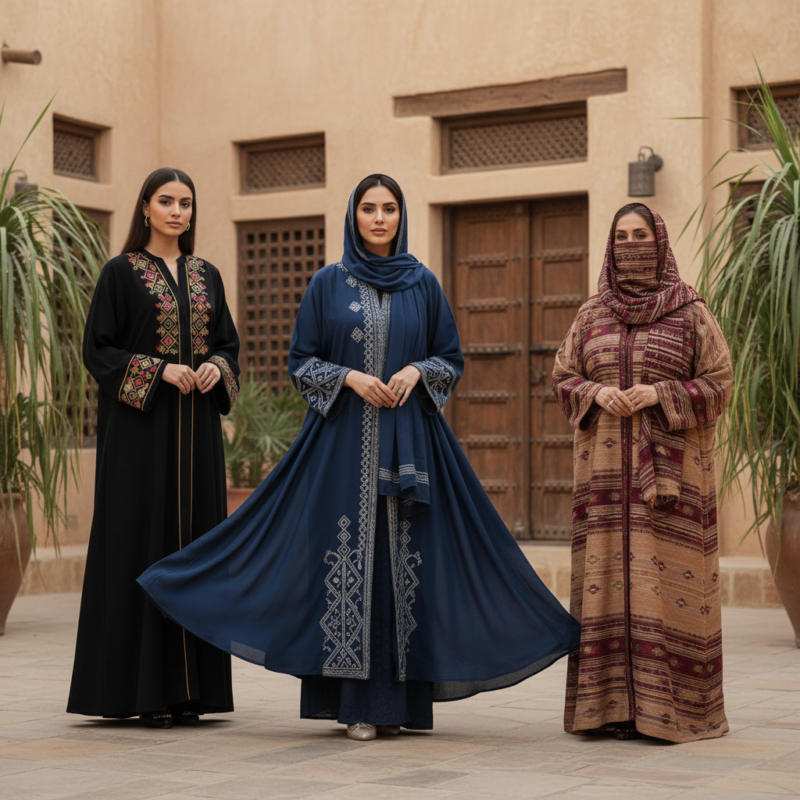
Step into the rich tapestry of Saudi culture, where tradition and elegance intertwine beautifully. The abaya, far more than just attire, is a canvas for heritage. If you’re captivated by designs that tell a story, then delving into Saudi heritage abaya designs is a journey you won’t regret.
These aren’t just contemporary interpretations; they’re echoes of centuries-old artistry, crafted to grace women with dignity and unparalleled style. Let’s uncover the most exquisite designs that celebrate the Kingdom’s diverse aesthetic.
1. The Embellished Najdi Abaya: Desert Bloom
Hailing from the heart of Saudi Arabia, the Najdi abaya is renowned for its intricate embroidery, often in rich, contrasting colors against a black or deep-toned base. Think geometric patterns and floral motifs, sometimes inspired by the region’s desert flora.
- Fabric: Often uses luxurious silks, crepes, or denser fabrics for structure, sometimes with subtle metallic threads woven in.
- Color Palette: While the abaya itself is typically dark, the embroidery bursts with shades like gold, silver, deep reds, emerald greens, and royal blues.
- Styling: Perfect for formal events, Eid celebrations, or special occasions. Pair with minimalist gold accessories and elegant heels. A matching embroidered hijab completes the opulent look.
“Fashion is not something that exists in dresses only. Fashion is in the sky, in the street, fashion has to do with ideas, the way we live, what is happening.” – Coco Chanel
2. The Hejazi Abaya: Jeddah’s Coastal Chic
From the bustling streets of Jeddah and the holy cities of Makkah and Madinah, the Hejazi abaya offers a distinct, often more relaxed yet equally ornate aesthetic. It frequently features elaborate hand-stitched detailing, particularly around the cuffs and neckline.
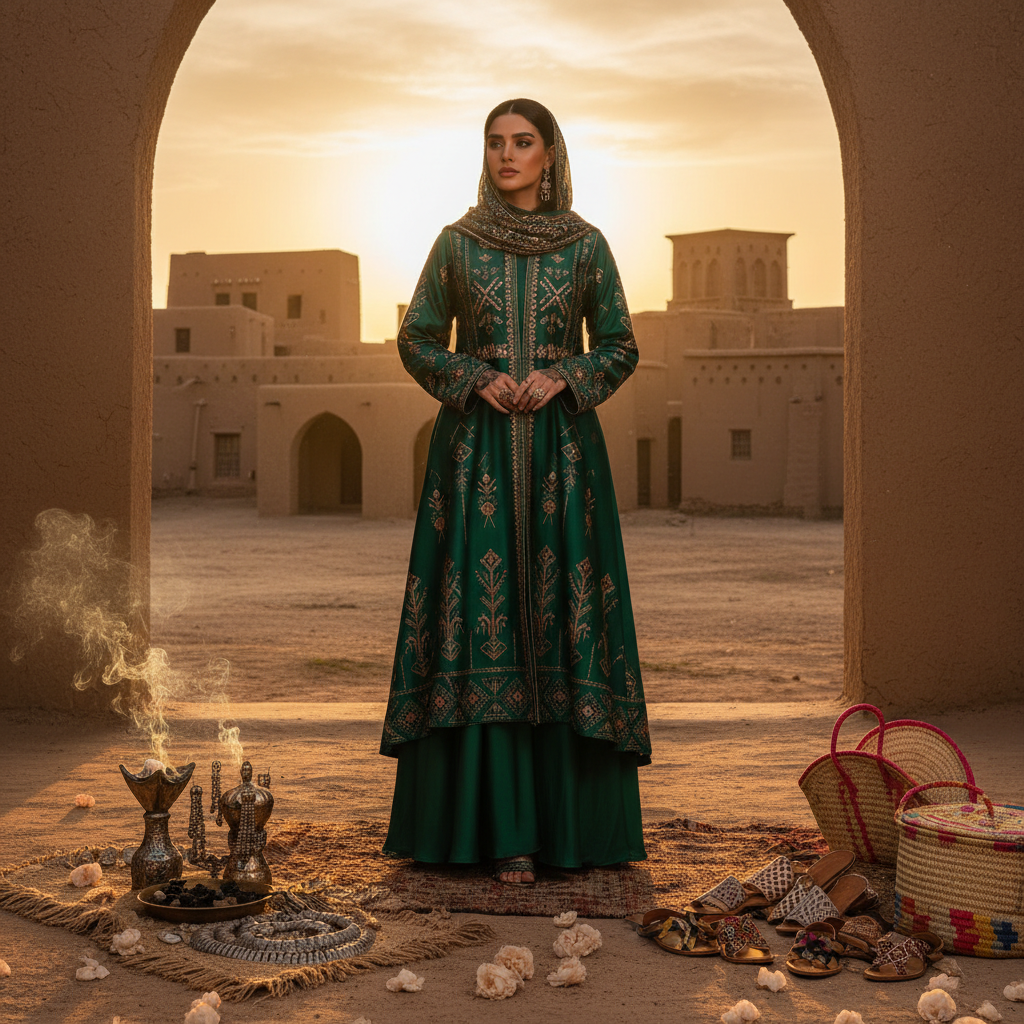
- Design Elements: Look for delicate Sadu-inspired weaving, floral patterns, or even intricate beadwork. Sleeves might be slightly wider or have a more flowy cut.
- Fabric: Lighter, breathable fabrics like soft crepes, georgette, or chiffon are commonly used to suit the coastal climate.
- Styling: Versatile for both daytime elegance and evening gatherings. Accessorize with pearls or silver jewelry. Consider pairing with an ornate clutch and comfortable, stylish sandals or mules.
3. The Asiri Abaya: Mountain Majesty
The Asir region, with its unique architecture and vibrant art, inspires abayas that are truly distinctive. These designs often feature colorful bands of fabric, geometric shapes, and bold contrasting trims, reflecting the region’s traditional motifs (like the Al-Qatt Al-Asiri art).
- Design Elements: Expect striking borders, horizontal or vertical bands of color, and sometimes appliqué work. The silhouette might be slightly more structured.
- Fabric: Mid-weight fabrics like smooth crepe or even wool blends for cooler mountainous evenings are common.
- Styling: Ideal for cultural events, National Day celebrations, or when you want to make a bold statement. Keep accessories simple to let the abaya shine. Think understated gold earrings and classic loafers.
💡 Pro Tip: When choosing an authentic Saudi heritage abaya design, pay close attention to the craftsmanship. Hand-embroidered pieces will have slight irregularities that add to their charm and value, distinguishing them from mass-produced items.
4. The Eastern Province Abaya: Pearl of the Gulf
Influenced by its coastal proximity and historical trade routes, abayas from the Eastern Province often showcase rich, flowing designs with subtle yet luxurious embellishments. Think less overt embroidery and more sophisticated fabric manipulation or delicate beading.
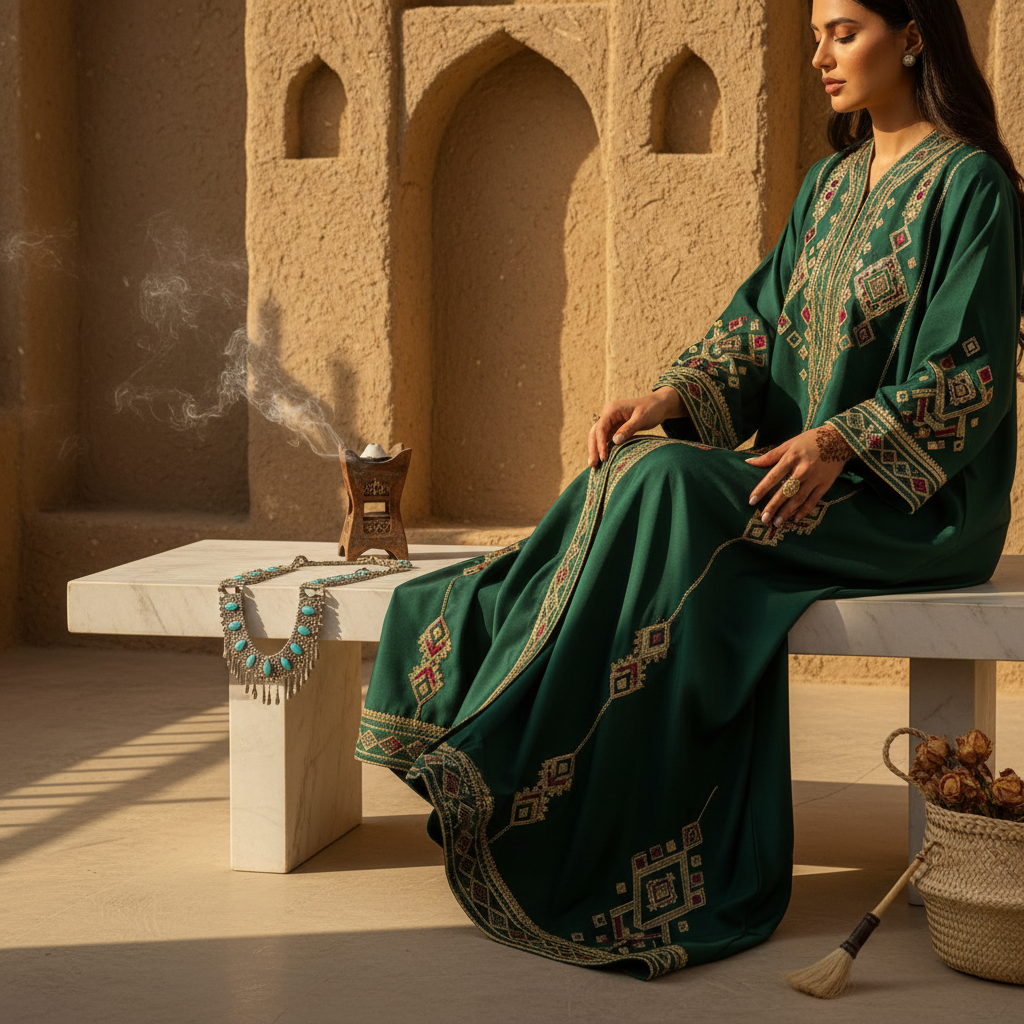
- Design Elements: Expect intricate beadwork, delicate crystal detailing, or perhaps a more understated yet elegant cut. Sometimes, mother-of-pearl buttons or pearl accents are used.
- Fabric: Often premium, flowing materials such as silk blends, fine nida, or high-quality georgette, chosen for their drape and luxurious feel.
- Styling: Perfect for sophisticated evening events, family gatherings, or formal dinners. Pair with fine jewelry, a statement handbag, and elegant heels.
5. The Bisht-Inspired Abaya: Royal Grandeur
Drawing inspiration from the traditional men’s cloak, the Bisht, this abaya style embodies grandeur and formality. It features a wider, often flowing cut with distinctive, ornate gold or silver trim along the edges, collar, and sometimes the sleeves.
- Design Elements: The hallmark is the opulent bisht-style embroidery, known as zarboun, typically in metallic threads, outlining the front opening and sometimes the cuffs.
- Fabric: Usually heavier, more formal fabrics like thick crepe, velvet, or fine wool blends, giving it a structured yet flowing silhouette.
- Styling: Reserved for the most formal occasions like weddings, official events, or high-profile gatherings. Complete the look with an equally elegant hijab, rich accessories, and dress shoes.
Embracing a Saudi heritage abaya design means wearing a piece of art that bridges past and present. Each style tells a unique story of regional identity and artisanal skill.
For more authentic and elegant abaya options, explore our curated collection at AMOFashion Ltd. Discover the perfect fusion of tradition and contemporary fashion tailored for you.
FAQ – Saudi Heritage Abaya Designs
What makes an abaya “heritage-inspired”?
A heritage-inspired abaya incorporates traditional motifs, embroidery techniques (like Sadu), regional cuts, or fabric choices that are historically significant to Saudi Arabian culture. It goes beyond simple modesty wear by carrying cultural significance.
Which fabrics are best for Saudi heritage abayas?
Authentic heritage abayas often use luxurious and durable fabrics such as silk, rich crepes, high-quality Nida fabric, velvet, or even fine wool blends, especially those suitable for intricate embroidery and draping.
How can I tell if a heritage abaya is authentic?
Look for genuine hand embroidery, the use of traditional motifs (like Najdi, Hejazi, or Asiri patterns), quality of fabric, and reputable designers or brands who understand and respect the cultural significance of their designs. Brands like AMOFashion Ltd prioritize authenticity and craftsmanship in their selections.