
Blog
5 Exquisite Moroccan Abaya Styles for Your 2026 Special Occasions
09
Jun
Jun
5 Exquisite Moroccan Abaya Styles for Your 2026 Special Occasions
Preparing for a significant event? A wedding, an engagement, or a festive Eid gathering? You want to look effortlessly elegant and truly special. The moroccan abaya for special occasions offers precisely that: a captivating blend of tradition, luxury, and modesty that turns heads. But with so many beautiful options, how do you choose the perfect one?
Forget generic advice. We’re diving deep into five distinct styles and providing a comprehensive guide to ensure your Moroccan abaya is not just an outfit, but a statement. Get ready to illuminate your next celebration!
💡 Pro Tip: Always consider the event’s formality, time of day, and season when selecting your abaya. Lighter fabrics and brighter colors suit daytime summer events, while rich velvets and deep tones are perfect for elegant evening affairs.
1. The Luxurious Kaftan Abaya for Grand Celebrations
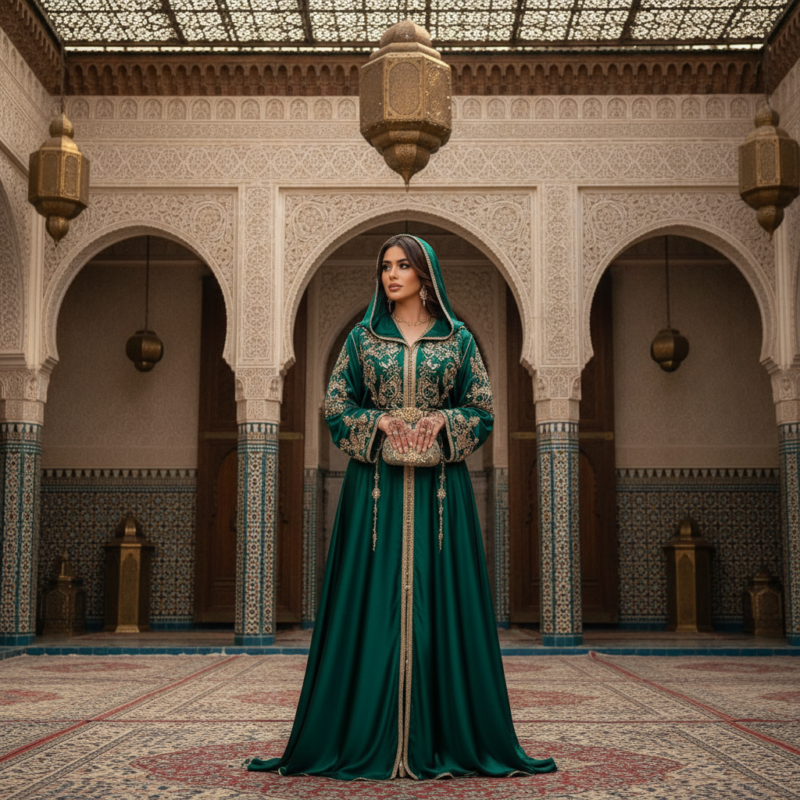
Often adorned with intricate embroidery and rich fabrics, the kaftan abaya is synonymous with Moroccan grandeur. This flowy silhouette offers comfort without sacrificing elegance, making it perfect for events where you’ll be mingling and celebrating for hours.
- Occasion: Weddings (especially as a guest), major Eid celebrations, formal engagement parties.
- Fabric Focus: Silk, chiffon, georgette, often with delicate lining.
- Embellishments: Hand-stitched gold or silver embroidery, crystal details, beaded work around the neckline and cuffs.
- Styling: Pair with a matching or contrasting thin belt to define the waist, an elegant turban-style hijab, delicate drop earrings, and block heels or embellished flats.
2. The Elegant Takchita: Two Pieces, Double the Impact
A takchita is a traditional Moroccan two-piece dress: an underdress (tahtia) and an open overdress (dfina), often belted. This layering creates a luxurious, regal look, allowing for stunning contrasts in fabric and embroidery.
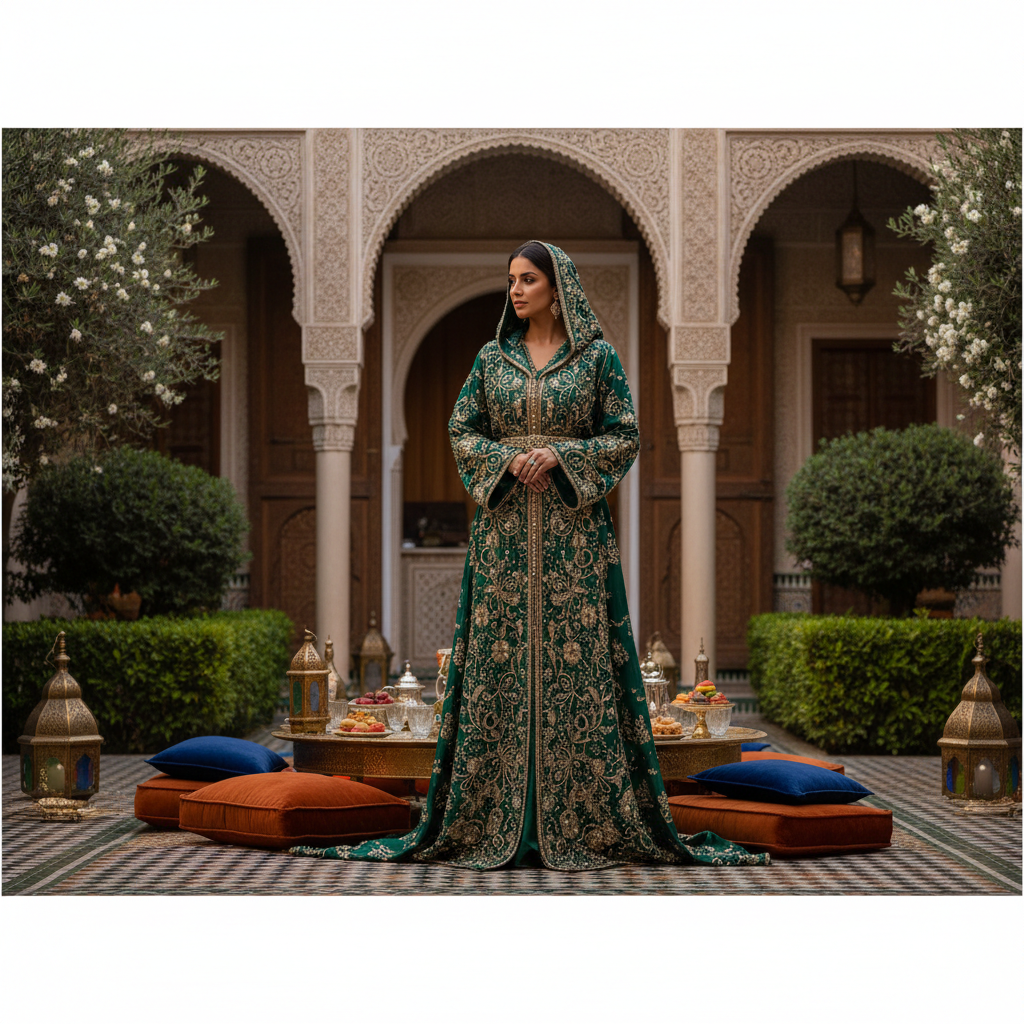
- Occasion: High-profile weddings (especially if you’re close to the family), formal cultural events, significant anniversaries.
- Fabric Focus: Brocade, satin, velvet, or heavily embroidered crepe for the dfina; silk or soft cotton for the tahtia.
- Embellishments: Elaborate ‘sfifa’ (braiding) and ‘aakad’ (buttons) running down the front, detailed embroidery on both layers.
- Styling: Keep accessories refined. A simple, elegant hijab that complements the colors, a statement clutch, and high heels. The belt (mdamma) is usually a focal point itself.
“Fashion is about dressing according to what’s fashionable. Style is more about being yourself.” – Oscar de la Renta. In Moroccan abayas, your style shines through each exquisite detail.
3. The Modest Djellaba for Distinguished Gatherings
While often seen as everyday wear, luxurious djellabas crafted from fine materials with thoughtful detailing are perfectly suited for semi-formal to formal occasions. Think elevated fabrics and subtle embellishments.
- Occasion: Family Eid lunches, intimate Nikkah ceremonies, cultural gatherings, formal dinners.
- Fabric Focus: High-quality crepe, linen-silk blends, fine wool for cooler seasons.
- Embellishments: Minimalist yet intricate ‘sfifa’ along the hood and sleeves, perhaps subtle hand embroidery on the chest.
- Styling: A tailored fit is key. Pair with a coordinating hijab in a smooth fabric, elegant leather sandals or pointed flats, and a chic wristlet bag.
4. The Contemporary Open Abaya with Moroccan Flair
For those who love a modern touch, an open abaya with Moroccan-inspired details offers versatility and chic elegance. This style often features exquisite trims or a flowing design reminiscent of traditional motifs.
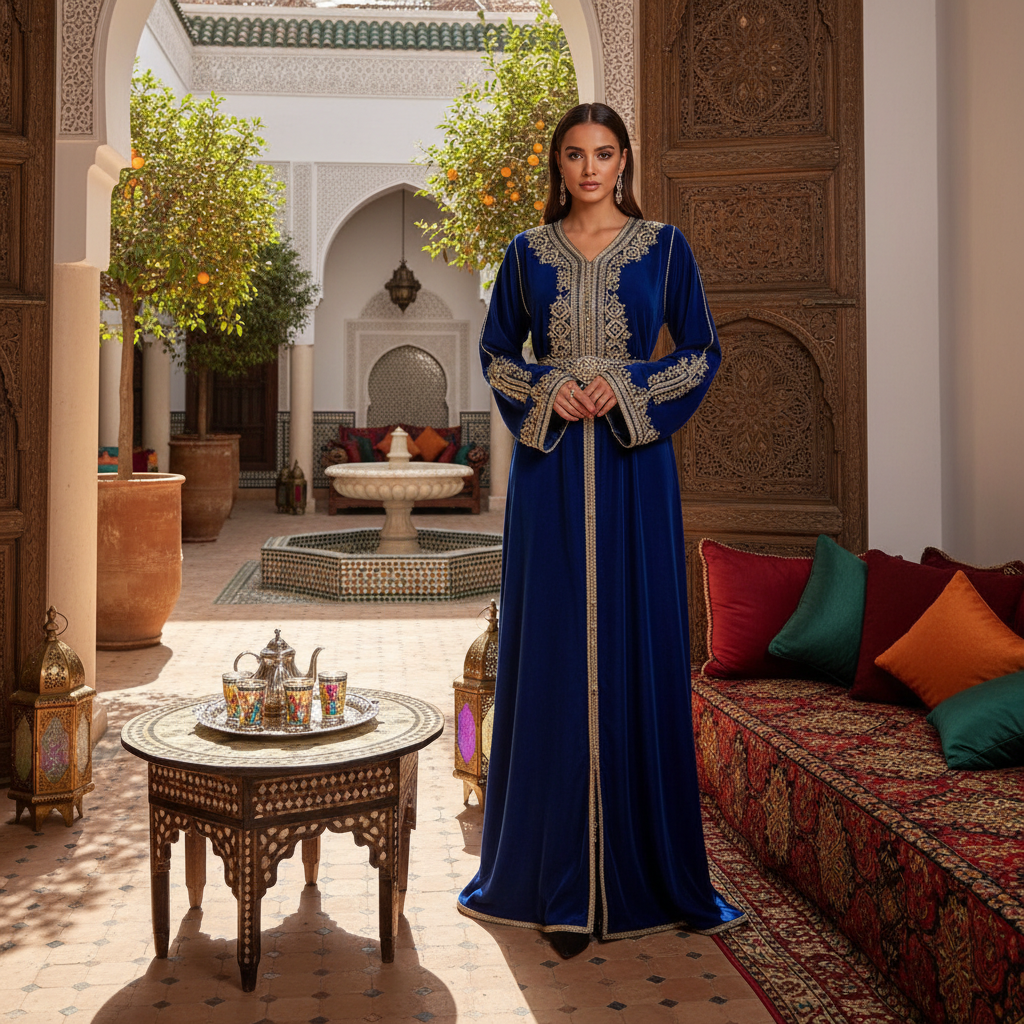
- Occasion: Engagement parties, chic Ramadan Iftars, sophisticated dinner parties, guest of honor at casual but elegant events.
- Fabric Focus: Flowy crepe, soft nida, or even delicate lace overlays.
- Embellishments: Discreet ‘sfifa’ on the lapels, bell sleeves, or a unique cut.
- Styling: Layer over a matching slip dress or wide-leg trousers and a top. Accessorize with statement jewelry that peeks from the open front, a structured bag, and stiletto heels. Check out our open abaya collection for inspiration.
5. The Embellished Evening Moroccan Abaya Dress
Sometimes, a fitted or semi-fitted abaya dress with opulent embellishments is the answer. This style offers a sleek silhouette while still celebrating Moroccan artistry, perfect for making a grand entrance.
- Occasion: Gala dinners, very formal weddings, awards ceremonies, luxury banquets.
- Fabric Focus: Satin, velvet, heavy crepe, often with a slight sheen.
- Embellishments: All-over delicate beading, strategically placed crystal clusters, intricate threadwork creating a ‘pattern’ on the fabric.
- Styling: Focus on a sophisticated mono-color palette. Pair with a silk hijab in a complementary shade, a small clutch, and barely-there heels.
FAQs About Moroccan Abayas for Special Occasions
What’s the difference between a Moroccan abaya, kaftan, takchita, and djellaba?
While often used interchangeably, they differ. An abaya is typically a simple, loose-fitting cloak. A kaftan is a broader term for a loose, often embroidered tunic or gown. A takchita is specifically a Moroccan formal two-piece dress (underdress and overdress). A djellaba is a traditional Moroccan robe with a hood, usually simpler than a kaftan or takchita, and is worn daily but can be dressed up for occasions.
How do I choose the right size and length for a special occasion abaya?
For special occasions, ensure your abaya just grazes the floor when worn with your chosen heels (or flats). It should be loose enough for comfortable movement but not so voluminous that it overwhelms your frame. Always check the brand’s specific size chart; consider going up a size if you prefer a more modest, flowing look. Remember, a well-fitting abaya enhances its elegance.
How should I care for my embellished Moroccan abaya?
Most embellished or silk Moroccan abayas require delicate care. Hand washing in cold water with a mild detergent is often recommended, or professional dry cleaning. Avoid harsh chemicals or machine washing, which can damage delicate embroidery, beads, and the fabric itself. Always air dry away from direct sunlight.