
Blog
7 Key Differences: Abaya vs. Indian Traditional Dress in 2026
18
Jun
Jun
7 Key Differences: Abaya vs. Indian Traditional Dress in 2026
Ever wondered about the elegant grace of an abaya compared to the vibrant splendor of Indian traditional dress? While both apparel styles represent rich cultural heritage and a commitment to modesty, they tell uniquely different stories through their design, fabric, and purpose. Let’s delve into the fascinating distinctions between an abaya vs Indian traditional dress, helping you appreciate their individual beauty and significance.
Understanding these differences isn’t just about fashion; it’s about respecting diverse cultural expressions. Whether you’re a fashion enthusiast or simply curious, this guide will illuminate the unique characteristics of each.
1. Silhouette and Structure
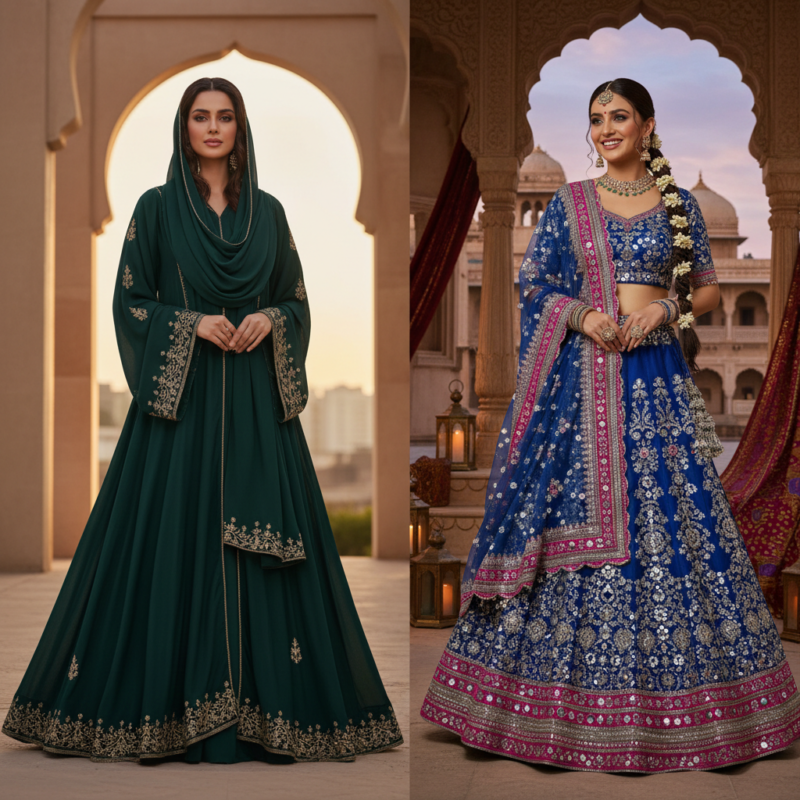
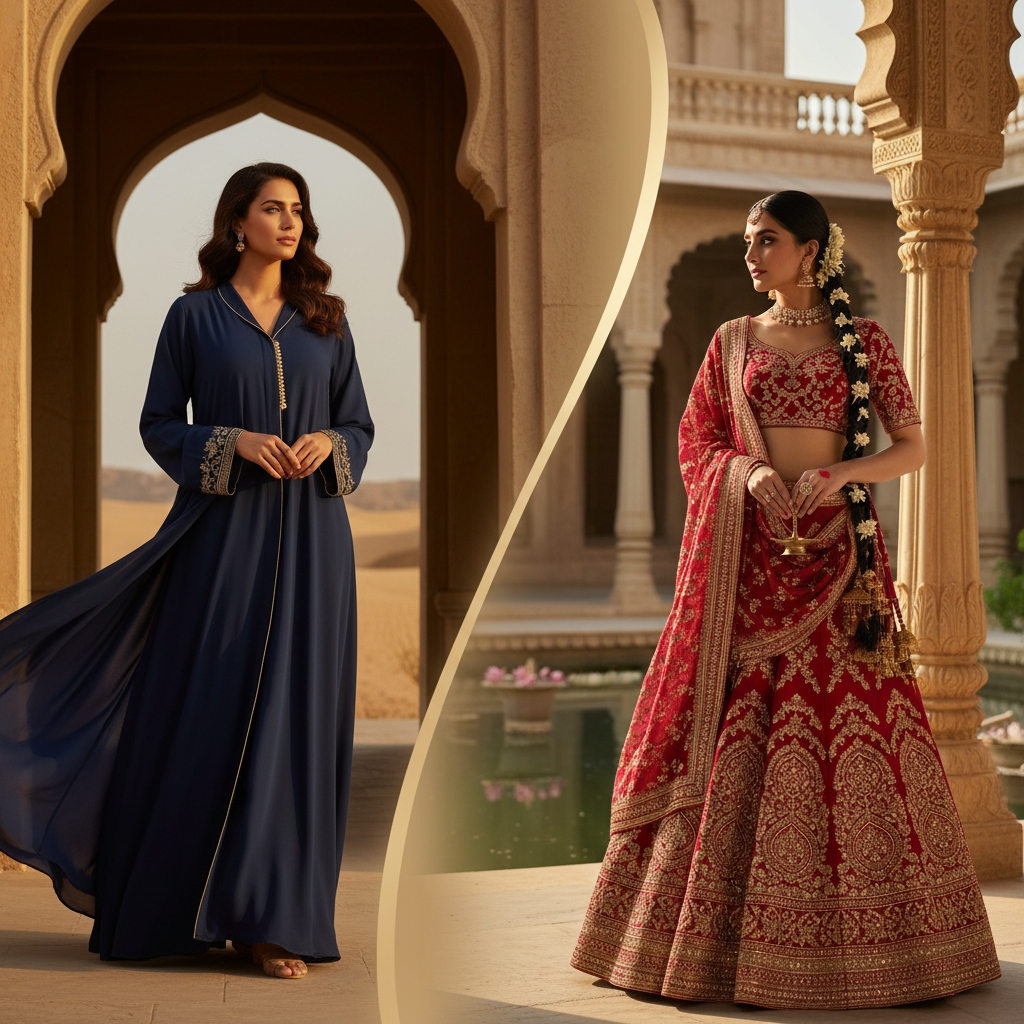
The core difference lies in their fundamental construction. An abaya is typically a loose, long, and flowing gown, often resembling a robe or cloak. It’s designed for full-body coverage, draping effortlessly without emphasizing body shape. Standard abayas feature a simple, often streamlined cut.
In contrast, Indian traditional dresses encompass a wide range, often consisting of multiple pieces that create a distinct silhouette. A saree, for example, is a long unstitched fabric draped over a petticoat and a fitted blouse (choli). A lehenga choli involves a flared skirt, a fitted blouse, and a dupatta (scarf). These garments often involve more tailored, fitted, or intricately draped elements.
2. Color Palette and Embellishments
Traditional abayas primarily favor a monochromatic palette, with black historically being the most common. While modern abayas incorporate various colors and subtle designs, the emphasis remains on understated elegance. Embellishments, if present, are usually minimal – perhaps delicate embroidery, beadwork on sleeves, or subtle crystal accents.
Indian traditional dresses, on the other hand, are renowned for their riot of colors and intricate embellishments. Think vibrant reds, blues, greens, and yellows, often adorned with:
- Zari work (gold/silver thread embroidery)
- Resham embroidery (silk thread work)
- Mirror work
- Sequins and beads
- Gotta Patti (applique work)
The goal is often to create a dazzling, celebratory visual spectacle, starkly different from the abaya’s reserved modesty.
💡 Pro Tip: When choosing between an abaya and Indian traditional wear for an event, consider the cultural context and the level of formality. An abaya is suitable for daily modesty and religious settings, while Indian wear shines at festive occasions and weddings.
3. Cultural and Religious Significance
The abaya is deeply rooted in Islamic tradition, serving as a garment of modesty for Muslim women, particularly in Arab countries. It embodies principles of humility and protection from unwanted attention. It is a symbol of religious identity and adherence to specific interpretations of Islamic dress codes.
“Fashion is not necessarily about labels. It’s not about brands. It’s about something else that comes from within you.” – Ralph Lauren
This rings true for both the abaya and Indian wear, as they are extensions of an individual’s cultural and personal identity.
Indian traditional dresses, while often reflecting modesty, are primarily linked to regional identity, celebratory occasions, and heritage within Hinduism, Sikhism, and other Indian faiths. Their significance is more tied to festivals, ceremonies, and marital status than strict daily religious observance.
4. Modesty Philosophy
While both emphasize modesty, their approaches differ. The abaya achieves modesty through full-body enclosure, loose fit, and often a neutral color palette, effectively minimizing the outline of the body. Combined with a hijab, it ensures comprehensive coverage.
Indian dress achieves modesty through various means: high necklines, longer sleeves, and the strategic draping of unstitched fabrics like the saree or the use of a dupatta to cover the head and chest. However, many contemporary Indian styles can also be more revealing, especially for celebratory fashion statements. Explore our exquisite collection of modern abayas for various occasions.
5. Usage Scenarios and Occasions
An abaya is primarily worn for daily life and religious observances, including prayers, visiting mosques, and general public outings in many Muslim-majority regions. It’s a garment of everyday wear that ensures adherence to modesty codes.
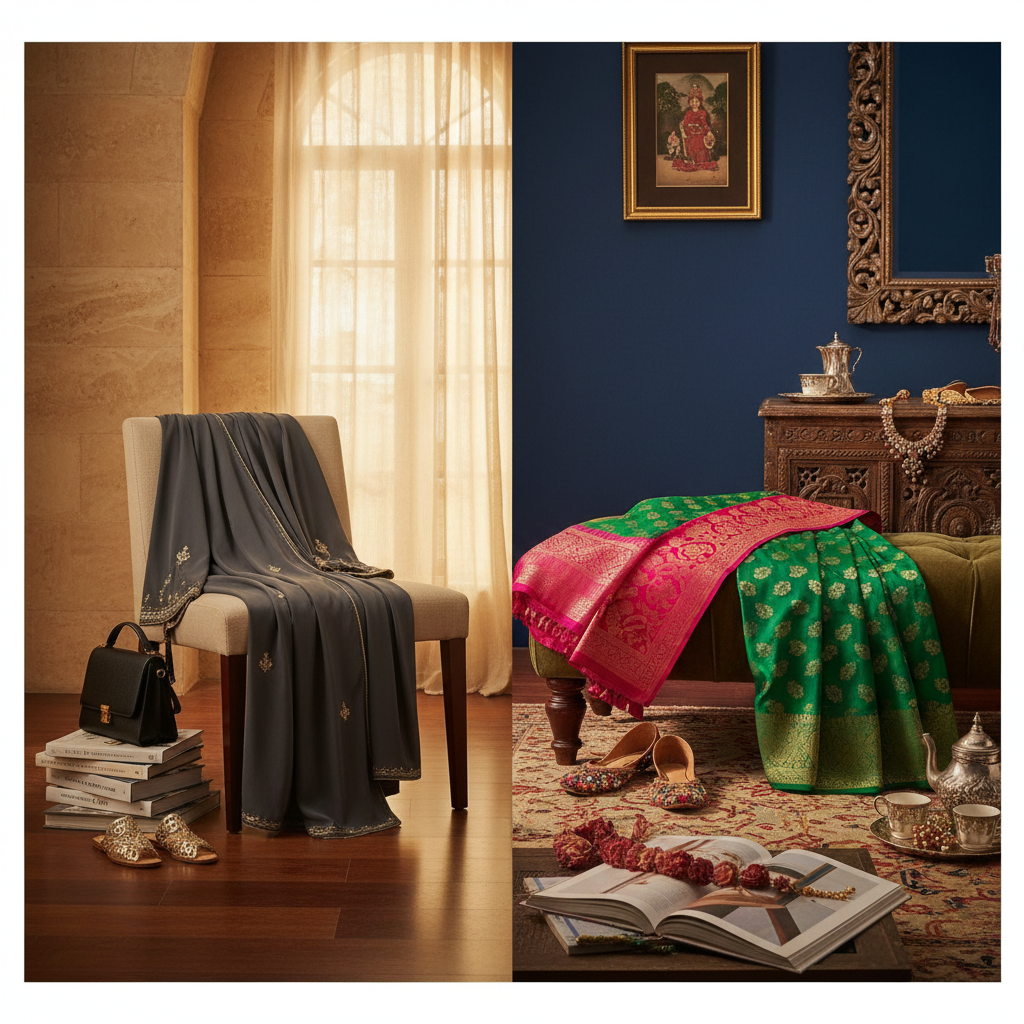
Indian traditional dresses are typically reserved for special occasions such such as weddings, festivals (Diwali, Eid, Holi), religious ceremonies, and cultural events. While some Indian women wear salwar kameez or sarees daily, particularly in rural areas, elaborate outfits are saved for celebrations.
6. Regional Influence
The abaya, while having slight regional variations (e.g., Saudi, Emirati, Moroccan styles), maintains a fairly unified form across the Arab world and beyond, symbolizing a shared Islamic identity.
Indian traditional dress is incredibly diverse, with styles varying dramatically by region, state, and community. A Rajasthani lehenga, a Bengali saree, a Punjabi salwar kameez, and a South Indian Kanchipuram silk saree are distinct forms each telling a story of its origin. This regional specificity is a hallmark of Indian fashion.
7. Fusion Trends: Indo-Abaya
The fashion world is ever-evolving, leading to fascinating fusions. The concept of an “Indo-Abaya” has emerged, blending elements of both cultures. This might involve:
- Abayas with intricate Indian-inspired embroidery.
- Using rich Indian fabrics or prints in abaya designs.
- Abayas with a more structured or layered look inspired by traditional Indian silhouettes.
These fusion pieces offer a bridge between two beautiful worlds, catering to a global audience that appreciates diverse aesthetics. For the latest styles, check out our amazing range of modest dresses perfect for any occasion.
FAQ – Abaya vs. Indian Traditional Dress
Is a saree considered an abaya?
No, a saree is not an abaya. A saree is an unstitched length of fabric draped over a blouse and petticoat, originating from the Indian subcontinent, while an abaya is a loose, full-length robe primarily worn by Muslim women for modesty.
Can I wear an abaya to an Indian wedding?
While you can certainly wear an abaya to an Indian wedding, it might stand out. For Indian weddings, guests typically wear vibrant, festive Indian attire. If you choose an abaya, consider one with elegant embellishments, rich fabrics, or a sophisticated cut that aligns with a celebratory atmosphere, rather than a simple daily abaya.
Which is more comfortable: a lehenga or an abaya?
Comfort depends on the specific design, fabric, and individual preference. Generally, a well-fitted abaya made from breathable fabric can be very comfortable due to its loose, flowing nature. A lehenga, with its fitted choli and voluminous skirt, can be comfortable for celebrations but might feel more restrictive for extended periods compared to the freedom of movement an abaya offers.