
Blog
7 Exquisite Traditional Indian Abaya Styles You Need to Discover
02
May
May
7 Exquisite Traditional Indian Abaya Styles You Need to Discover
Tired of generic abayas and craving a touch of cultural flair? India, a land of unparalleled textile artistry, offers a breathtaking array of traditional Indian abaya styles that redefine modest fashion. Forget the notion that abayas are uniform; in India, they are canvases for intricate craftsmanship and regional heritage. Let’s delve into seven exquisite styles that blend modesty with magnificent Indian aesthetics, making you stand out with grace and cultural pride.
💡 Pro Tip: Look for sustainable fabrics like organic cotton or Tencel blends when choosing your Indian abaya to support eco-conscious fashion and promote artisan communities.
1. The Regal Hyderabadi Abaya
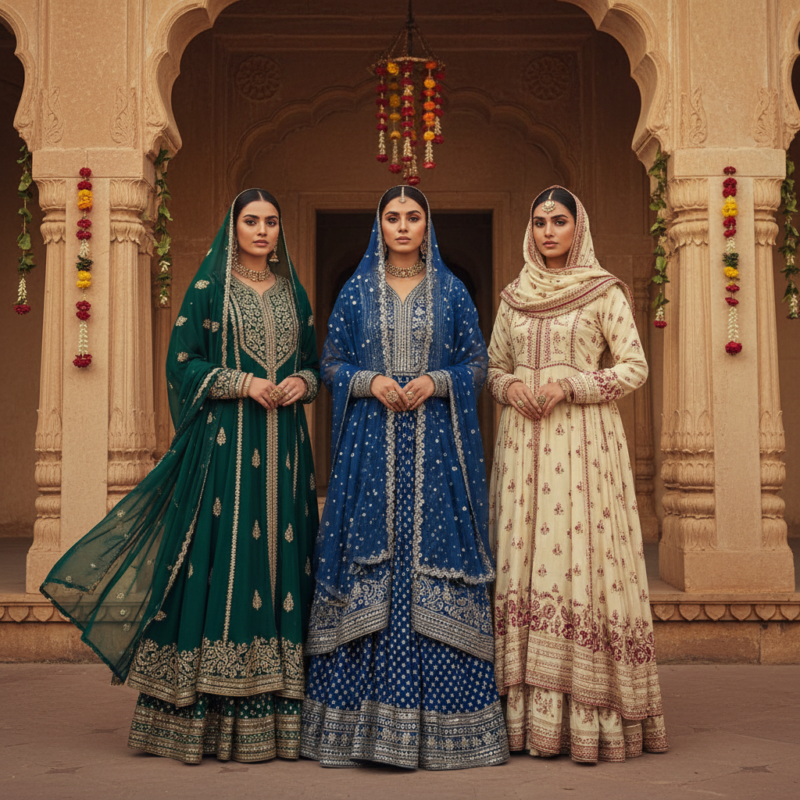
Known for its grandeur, the Hyderabadi abaya often features rich fabrics like silk or velvet, adorned with intricate Zardozi or Aari embroidery. These styles frequently incorporate motifs like paisleys and floral patterns, reminiscent of Mughal art.
- Fabric: Silk, Velvet, Georgette
- Color: Deep jewels tones (emerald, sapphire, ruby) or classic black
- Occasion: Weddings, formal events, festive celebrations
- Hijab Pairing: Matching silk or a contrasting embroidered silk scarf
- Accessories: Pearl jewellery, embellished clutch, juttis
2. The Elegant Lucknowi Chikankari Abaya
Hailing from Uttar Pradesh, the Chikankari abaya showcases delicate hand embroidery, typically in white thread on pastel or white fabric. Its subtle elegance makes it perfect for warmer climates.
- Fabric: Cotton, Georgette, Mulmul
- Color: Pastels (mint green, baby pink, lavender) and white
- Occasion: Daily wear, office, casual outings, Eid celebrations
- Hijab Pairing: Lightweight cotton or chiffon in a matching or complementary color
- Accessories: Minimal silver jewelry, tote bag, comfortable sandals
3. The Vibrant Gujarati Mirror Work Abaya
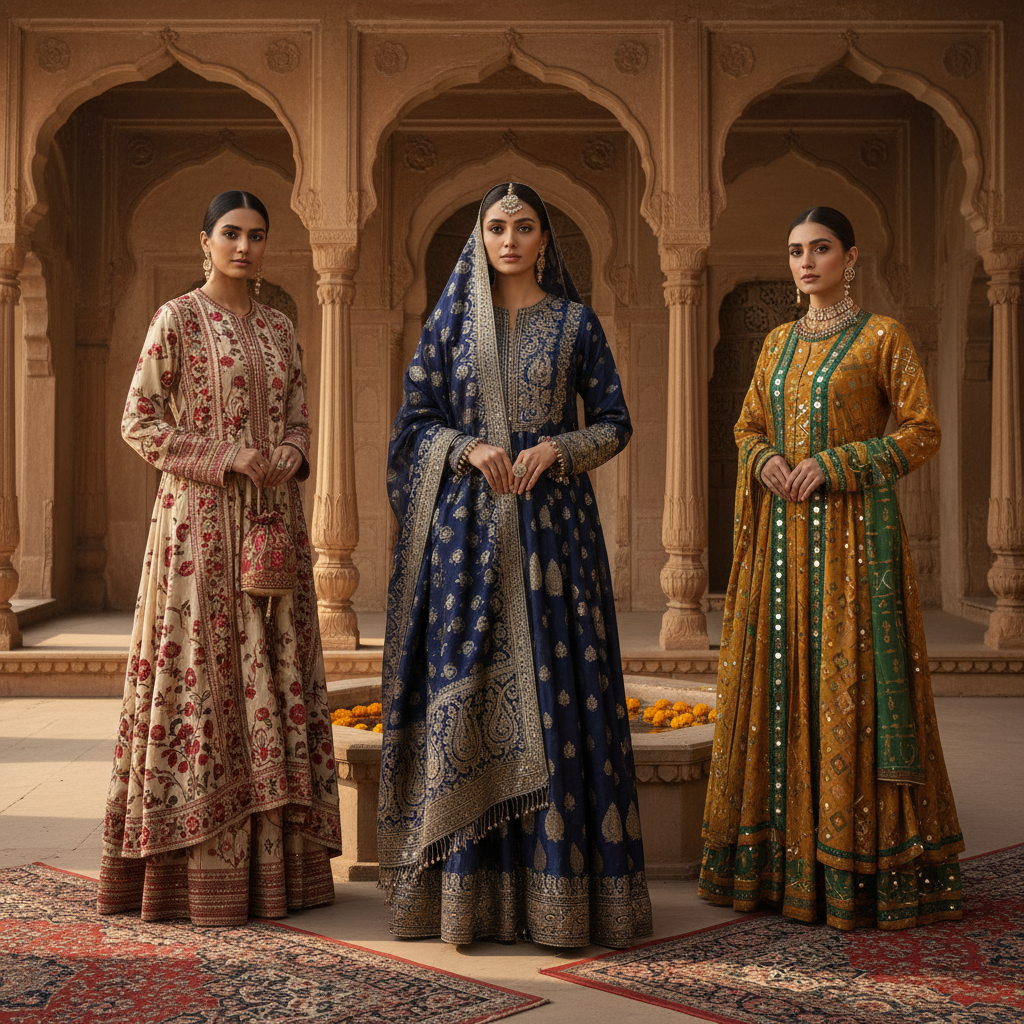
From the Kutch region, this abaya style is a burst of color and mirrors. Small, reflective mirrors are intricately stitched into geometric or folk patterns, creating a dazzling effect.
- Fabric: Cotton, Rayon, often with woven elements
- Color: Bright primary colors, multi-colored embroidery
- Occasion: Festivals, cultural events, beach holidays
- Hijab Pairing: Plain solid color hijab to balance the busyness, or a vibrant printed one
- Accessories: Oxidized silver jewelry, leather juttis, canvas bag
4. The Serene Kerala Kasavu-Inspired Abaya
Drawing inspiration from Kerala’s traditional Kasavu sarees, these abayas feature elegant golden borders on off-white or cream fabrics. They embody simplicity and grace.
- Fabric: Cotton, Linen, Silk-cotton blends
- Color: Off-white, cream with golden zari borders
- Occasion: Religious gatherings, family functions, understated elegance
- Hijab Pairing: Cream or off-white with a thin gold border, or a plain solid hijab
- Accessories: Temple jewelry, small clutch, comfortable block heels
5. The Artistic Kashmiri Pashmina Abaya
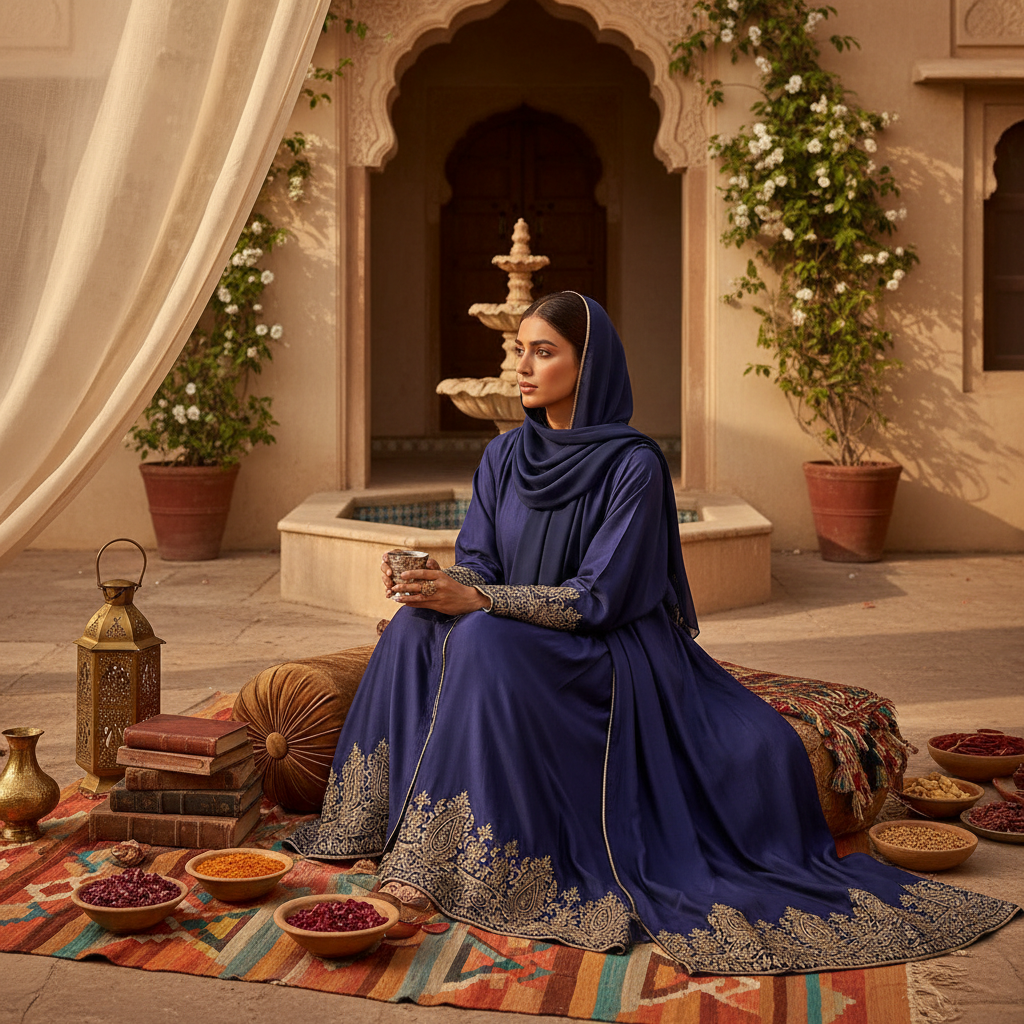
Though less common as a full abaya, the luxurious Pashmina wool is incorporated into abayas for colder regions. Expect fine embroidery (Ari or Sozni) on a warm, soft fabric.
- Fabric: Pashmina wool, fine merino wool blends
- Color: Earthy tones, deep blues, maroons, or classic black
- Occasion: Winter wear, outdoor events in colder climates
- Hijab Pairing: Matching Pashmina shawl or an elegant silk scarf
- Accessories: Kashmir silver jewelry, warm boots, statement bag
“Fashion is not necessarily about labels. It’s not about brands. It’s about something else that comes from within you.” – Ralph Lauren
6. The Contemporary Bandhani Abaya
Bandhani, or tie-dye, from Gujarat and Rajasthan brings a vibrant, playful element to abayas. Unique patterns are created by tying small knots before dyeing, resulting in dots, squares, or waves.
- Fabric: Cotton, Silk blends, Georgette
- Color: Multi-colored, bright reds, yellows, greens, indigo
- Occasion: Casual gatherings, festive wear, cultural events
- Hijab Pairing: Solid color hijab that picks up one of the Bandhani colors
- Accessories: Wooden bangles, colorful beaded earrings, comfortable wedge sandals
7. The Fusion Block Print Abaya
Inspired by the ancient art of block printing from Rajasthan, these abayas feature intricate floral, geometric, or narrative patterns printed onto natural fabrics. They offer a comfortable, earthy aesthetic.
- Fabric: Cotton, Linen, Khadi
- Color: Earthy tones, indigo, madder red, natural vegetable dyes
- Occasion: Daily wear, casual outings, sustainable fashion events
- Hijab Pairing: Plain cotton hijab in a solid contrasting color or a neutral tone
- Accessories: Terracotta jewelry, woven bag, espadrilles
Discovering traditional Indian abaya styles opens a world of elegant possibilities, allowing you to express your unique taste while honoring cultural heritage. For more exquisite modest wear, explore the diverse collection at Amo Fashion, where tradition meets contemporary design.
FAQs About Traditional Indian Abaya Styles
Q: What fabrics are best for Indian climates?
A: Lightweight, breathable fabrics like cotton, linen, georgette, and mulmul are ideal for India’s warm climate, offering comfort and elegance.
Q: Are traditional Indian abayas suitable for non-Muslims?
A: Absolutely! Abayas are a form of modest fashion, and their beautiful designs and comfortable silhouettes are embraced by women of all backgrounds who appreciate their elegance and cultural artistry.
Q: How do Indian abayas differ from Arabic abayas?
A: While both adhere to modesty, Indian abayas often feature more vibrant colors, intricate local embroidery (like Chikankari, Zardozi, mirror work), and regional textile influences (like Kasavu borders, Bandhani prints), distinguishing them from the typically black or solid-colored, simpler Arabic styles.